

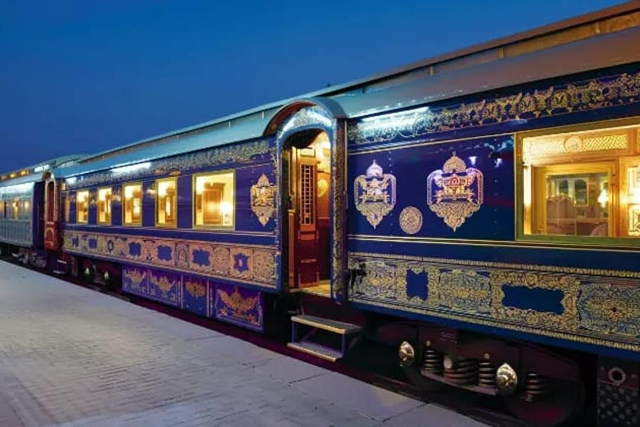
India offers a remarkable journey through history, with ancient monuments, historic cities, magnificent forts and sacred sites reflecting more than two thousand years of civilisation. For British travellers, exploring India’s UNESCO World Heritage Sites provides an opportunity to experience its diverse cultures and historic landscapes beyond conventional sightseeing.
One of the most comfortable ways to explore these destinations is by luxury train. Luxury rail journeys in India for British tourists combine comfortable accommodation, fine dining, attentive service and organised excursions, while allowing travellers to travel between destinations without repeatedly packing and changing hotels. The Palace on Wheels, Maharajas’ Express, Deccan Odyssey and Golden Chariot offer selected itineraries connecting travellers with important UNESCO-listed landmarks across different regions of India.
Exploring UNESCO World Heritage Sites by luxury train offers a convenient way to experience India’s important cultural landmarks without the logistical demands of a conventional multi-city tour. Accommodation, transportation, dining and much of the journey planning are combined in one seamless experience.
Instead of changing hotels regularly, travellers can settle into their cabins while the train connects different destinations. Organised excursions at each stop provide opportunities to explore historic monuments, archaeological sites, temples and heritage cities, often with knowledgeable local guides.
For UK travellers, this combination of heritage, culture and luxury offers a relaxed and structured way to experience India while maintaining a high level of comfort throughout the holiday.
Top UNESCO World Heritage Sites Covered by India's Luxury Trains
India’s luxury trains offer different routes, so the UNESCO World Heritage Sites included vary according to the itinerary and season. From the Mughal architecture of Agra to the rock-cut caves of Maharashtra and the historic monuments of Karnataka, each journey offers a different perspective on India’s heritage. Travellers should therefore choose their luxury train itinerary according to their interests, whether these centre on architecture, history, art, religion or culture.
Taj Mahal, Agra
The Taj Mahal in Agra is a UNESCO World Heritage Site and one of India’s most recognisable landmarks. Commissioned by Mughal emperor Shah Jahan in memory of his wife Mumtaz Mahal, it is renowned for its white marble architecture, intricate inlay work and symmetrical gardens. For luxury rail travellers, Agra is included in the Maharajas’ Express Treasures of India and Heritage of India itineraries, while the Palace on Wheels includes Agra on selected journeys.
Fatehpur Sikri
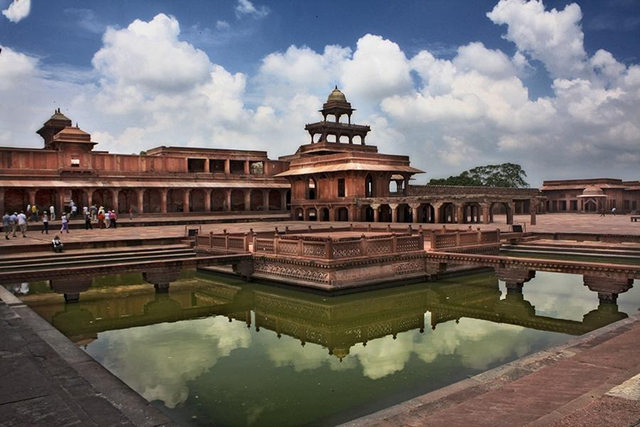
Fatehpur Sikri is a UNESCO World Heritage Site and a notable example of Mughal architecture and urban planning. Built by Emperor Akbar in the 16th century, the former capital is known for its red sandstone buildings, including Buland Darwaza, Diwan-i-Khas, Panch Mahal and Jama Masjid. Its architecture combines Islamic, Hindu and regional influences. Fatehpur Sikri features on selected Maharajas’ Express itineraries and is especially convenient to visit alongside Agra and the Taj Mahal.
Jaipur City, Rajasthan
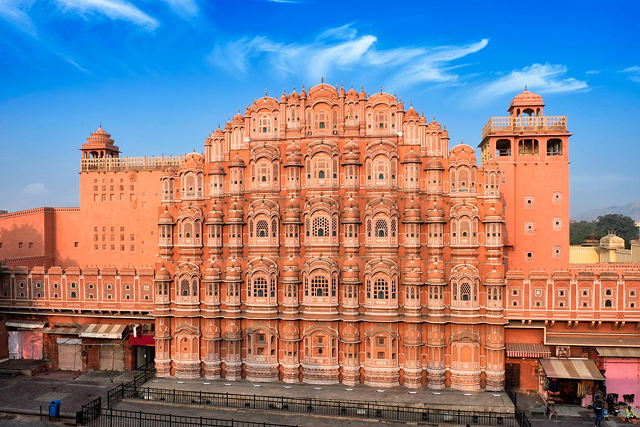
Jaipur, founded in 1727 by Maharaja Sawai Jai Singh II, is a UNESCO World Heritage Site recognised for its distinctive urban planning, architecture and cultural significance. Known as the Pink City, its historic centre features planned streets, traditional markets and impressive monuments. Key attractions include the City Palace and Jantar Mantar, while nearby Amber Fort forms part of the UNESCO-listed Hill Forts of Rajasthan. Jaipur is included on selected Palace on Wheels and Maharajas’ Express itineraries.
Hill Forts of Rajasthan
The Hill Forts of Rajasthan are a UNESCO World Heritage property comprising six forts: Chittorgarh, Kumbhalgarh, Ranthambore, Gagron, Amber and Jaisalmer. Together, they reflect the military traditions, architecture and cultural development of Rajput kingdoms between the 8th and 18th centuries. Luxury-train itineraries connect with several of these forts, although no single journey covers all six. The Palace on Wheels includes destinations associated with Jaipur, Ranthambore and Jaisalmer on selected itineraries.
Khajuraho Group of Monuments
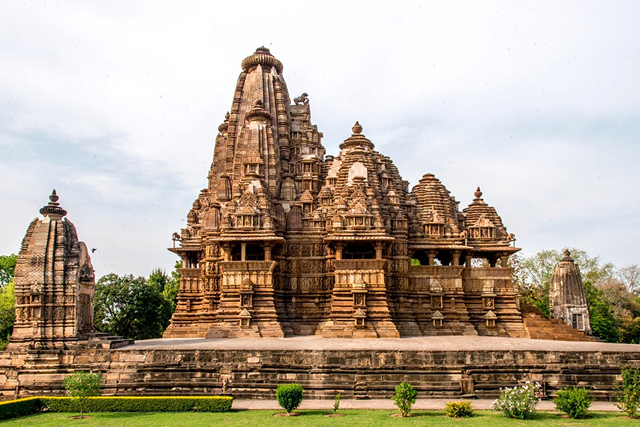
The Khajuraho Group of Monuments is a UNESCO World Heritage Site known for its exceptional temple architecture and intricate stone sculptures. Built mainly between the 10th and 12th centuries under the Chandela dynasty, the temples feature detailed carvings of deities, musicians, dancers and scenes from everyday life. They offer valuable insight into the religious and artistic traditions of medieval India. Khajuraho features on selected Maharajas’ Express itineraries, making it a notable stop for travellers interested in architecture and history.
Ajanta Caves
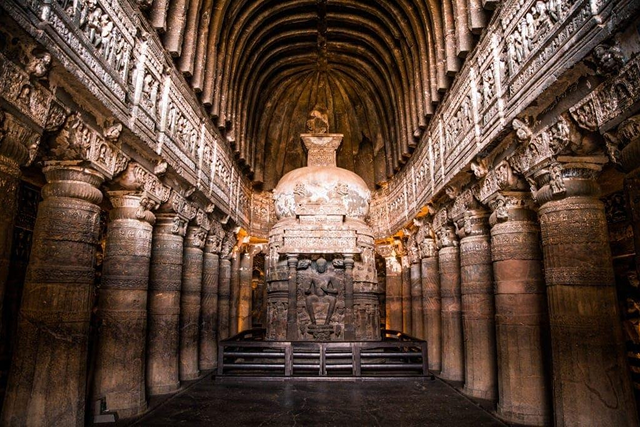
The Ajanta Caves are a UNESCO World Heritage Site and an important centre of ancient Buddhist art in Maharashtra. Carved into a horseshoe-shaped cliff, the complex contains rock-cut monasteries and prayer halls dating from different periods. Ajanta is especially known for its ancient murals depicting Buddhist stories, along with sculptures and detailed rock-cut architecture. The Deccan Odyssey connects with Ajanta on selected Maharashtra-focused itineraries, although routes and sightseeing arrangements vary by journey.
Ellora Caves
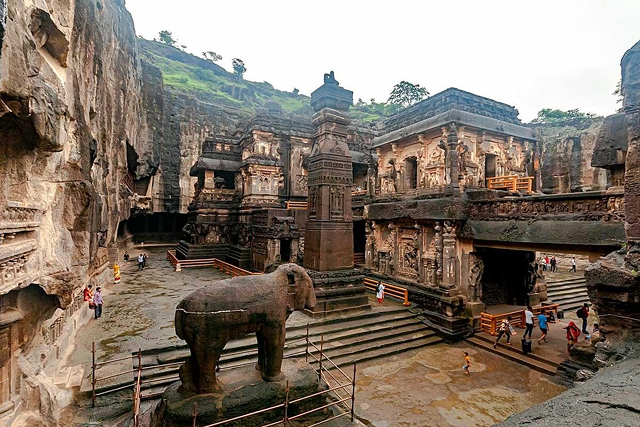
The Ellora Caves are a UNESCO World Heritage Site in Maharashtra, known for bringing together Buddhist, Hindu and Jain traditions within one monumental complex. Dating from the 6th to 10th centuries, the caves feature monasteries, temples, shrines and intricate sculptures carved into the Charanandri Hills. The celebrated Kailasa Temple, carved from a single mass of stone, is a highlight of the site. Ellora is included on selected Deccan Odyssey itineraries, depending on the route and departure.
Hampi
The Group of Monuments at Hampi is a UNESCO World Heritage Site and the former capital of the Vijayanagara Empire, which flourished between the 14th and 16th centuries. Its ruins include temples, market streets, royal enclosures and gateways set among granite landscapes along the Tungabhadra River. Highlights include the Virupaksha Temple, Vittala Temple complex and its famous stone chariot. Hampi can be experienced on selected Golden Chariot itineraries, depending on the route and operating schedule.
Mahabalipuram
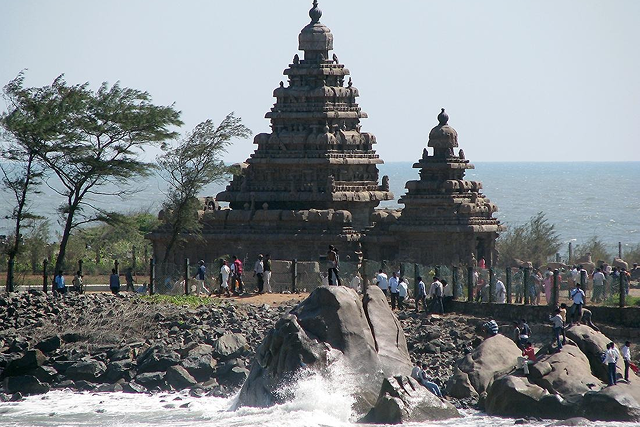
The Group of Monuments at Mahabalipuram is a UNESCO World Heritage Site on Tamil Nadu’s Coromandel Coast, known for its Pallava-era architecture and rock-cut monuments. Developed mainly during the 7th and 8th centuries, the site includes the Shore Temple, Pancha Rathas, rock-cut caves and large sculptural reliefs. Together, these monuments showcase the Pallavas’ contribution to South Indian temple architecture. Mahabalipuram is connected with selected Golden Chariot journeys, depending on the itinerary and departure.
Great Living Chola Temples
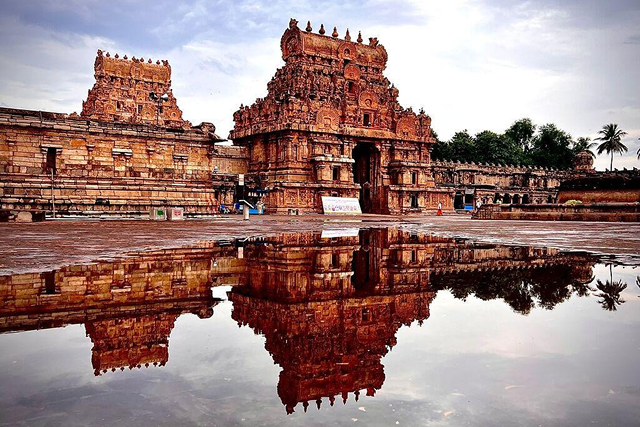
The Great Living Chola Temples are a UNESCO World Heritage Site comprising three major temples in Tamil Nadu: Brihadisvara at Thanjavur, Brihadisvara at Gangaikondacholapuram and Airavatesvara at Darasuram. Built between the 11th and 12th centuries under the Chola dynasty, they represent an important period in South Indian temple architecture. Brihadisvara at Thanjavur is particularly notable for its monumental design and sculptural detail. Selected Golden Chariot itineraries provide access to Chola heritage destinations, depending on the journey.
Which Luxury Train Is Best for UNESCO World Heritage Sites?
There is no single luxury train that is best for every UNESCO World Heritage Site in India; the right choice depends on the regions and heritage experiences travellers want to explore. The Maharajas’ Express connects with northern destinations such as Agra, Jaipur and Khajuraho, while the Palace on Wheels focuses on Rajasthan, including Jaipur, Ranthambore and Jaisalmer. The Deccan Odyssey provides access to Maharashtra’s Ajanta and Ellora Caves, while the Golden Chariot explores South Indian heritage, including Hampi and sites in Karnataka and Tamil Nadu. UK travellers should compare itineraries carefully before choosing.
Maharajas' Express
The Maharajas’ Express is well suited to travellers seeking a combination of Mughal, Rajput and central Indian heritage. Depending on the itinerary, journeys can include Agra, Fatehpur Sikri, Jaipur and Khajuraho, offering access to the Taj Mahal, historic Mughal monuments, Rajasthan’s architectural heritage and Chandela-era temples. Itineraries vary by departure, so travellers should check the specific journey before booking. For UK travellers, it offers a convenient introduction to some of northern India’s major heritage destinations.
Deccan Odyssey
The Deccan Odyssey is well suited to travellers interested in Maharashtra’s history and archaeology. Selected itineraries can include the UNESCO-listed Ajanta and Ellora Caves, known for Buddhist art, rock-cut architecture and the combination of Buddhist, Hindu and Jain monuments. Some journeys may also connect with Khajuraho, depending on the route and operating schedule. For UK travellers, the train offers a focused way to explore Maharashtra’s architectural and cultural heritage while enjoying a luxury rail experience.
Palace on Wheels
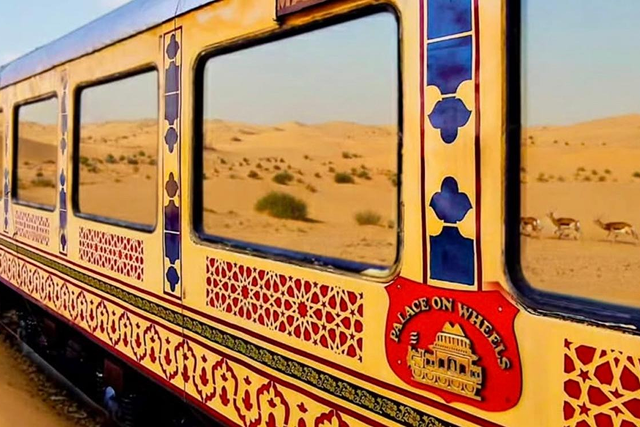
The Palace on Wheels is closely associated with Rajasthan and suits travellers interested in the region’s history, architecture and landscapes. Depending on the itinerary, journeys can include Jaipur, Chittorgarh, Jaisalmer, Ranthambore and Agra. Jaipur and Chittorgarh showcase Rajasthan’s historic heritage, while Jaisalmer offers its distinctive desert setting and fort. Ranthambore adds a wildlife dimension, and Agra provides access to the Taj Mahal. Its main strength is its concentration on Rajasthan’s heritage and culture.
Golden Chariot
The Golden Chariot is particularly suited to travellers exploring South India’s architectural and cultural heritage. Selected itineraries can include Hampi, Mahabalipuram and the Great Living Chola Temples. Hampi showcases the ruins of the Vijayanagara Empire, while Mahabalipuram is known for its Pallava-era monuments and Shore Temple. The Great Living Chola Temples highlight the architectural achievements of the Chola dynasty. For UK travellers seeking an experience beyond northern India’s Mughal monuments and Rajasthan’s forts, the Golden Chariot offers a distinct South Indian heritage journey.
How to Choose the Right Luxury Train for Your UNESCO Holiday
Choosing the right luxury train for a UNESCO-focused holiday depends mainly on the destinations and type of heritage you want to explore. Each train has a different regional focus, making it easier to match your journey with your interests.
- Choose Maharajas’ Express if: You want the Taj Mahal, Mughal heritage, Jaipur and Khajuraho, combining northern and central Indian history.
- Choose Deccan Odyssey if: Ajanta and Ellora are your priority, particularly for rock-cut architecture and Buddhist, Hindu and Jain heritage.
- Choose Palace on Wheels if: You want Rajasthan’s forts, palaces and historic cities, including Jaipur, Chittorgarh, Jaisalmer and Ranthambore.
- Choose Golden Chariot if: You want South Indian heritage, with destinations such as Hampi, Mahabalipuram and the Great Living Chola Temples.
UK travellers should check the exact itinerary, departure date and included excursions before booking, as routes and sightseeing programmes can vary. This helps ensure the journey matches the UNESCO sites and heritage experiences that matter most.
Planning a Luxury Train Holiday from the UK
Planning a luxury train holiday from the UK is best approached by choosing the itinerary first and the train second. Decide which UNESCO sites, cities and cultural experiences you want to include, then compare suitable journeys. The main luxury-train season generally falls during the cooler months, making sightseeing more comfortable. UK travellers should book early, particularly for preferred cabin categories, and check the exact itinerary and excursions before departure. Ensure your passport and Indian visa are valid, arrange international flights around the train schedule, and consider comprehensive travel insurance. Allow extra time for transfers and possible travel delays.
UNESCO Sites + Other Experiences on Luxury Train Journeys
A luxury train holiday in India offers more than UNESCO World Heritage Sites, combining heritage sightseeing with opportunities to experience the country’s living culture and diverse landscapes. Depending on the route, travellers can enjoy wildlife safaris, visits to palaces and historic forts, and excursions through characterful cities.
In Rajasthan, journeys may include desert landscapes and traditional villages, while regional cuisine introduces travellers to distinctive flavours and culinary traditions. Cultural performances, traditional music and dance, along with demonstrations of traditional arts and crafts, offer further insight into local traditions.
For UK travellers, this combination of heritage, wildlife, cuisine, culture and landscapes makes a luxury train journey a more complete introduction to India than a conventional tour focused only on historic monuments.
Frequently Asked Questions
Question 1. Which UNESCO World Heritage Sites can be visited by India’s luxury trains?
Depending on the train and itinerary, travellers can visit or connect with UNESCO sites including the Taj Mahal, Fatehpur Sikri, Jaipur, Khajuraho, Ajanta Caves, Ellora Caves, Hampi, Mahabalipuram and the Great Living Chola Temples. The exact sites vary by departure and route.
Question 2. Which luxury train is best for visiting the Taj Mahal?
The Maharajas’ Express and Palace on Wheels offer itineraries that include Agra, where travellers can visit the Taj Mahal. Always check the specific departure itinerary, as routes and excursions can change.
Question 3. Is the Taj Mahal a UNESCO World Heritage Site?
Yes. The Taj Mahal was inscribed on the UNESCO World Heritage List in 1983 and is one of India’s most internationally recognised heritage landmarks.
Question 4. Which luxury train covers Ajanta and Ellora Caves?
The Deccan Odyssey is particularly associated with itineraries covering Maharashtra’s UNESCO-listed Ajanta and Ellora Caves. These destinations are highlights for travellers interested in ancient Buddhist, Hindu and Jain heritage and rock-cut architecture.
Question 5. Does the Maharajas’ Express visit Khajuraho?
Selected Maharajas’ Express itineraries include Khajuraho. However, not every departure follows the same route, so travellers should check the itinerary for their chosen travel date.
Question 6. Which luxury train is best for Rajasthan’s UNESCO heritage?
The Palace on Wheels is a strong option for travellers primarily interested in Rajasthan. Depending on the itinerary, it connects destinations such as Jaipur, Chittorgarh, Jaisalmer and Ranthambore, offering access to several sites associated with Rajasthan’s UNESCO heritage.
Question 7. Which luxury train is best for South Indian heritage?
The Golden Chariot is designed around South Indian destinations and can provide access to heritage sites including Hampi and destinations associated with Mahabalipuram and the Great Living Chola Temples, depending on the selected itinerary.
Question 8. Are luxury train excursions guided?
Sightseeing excursions on luxury train journeys are generally organised as part of the itinerary and may include transportation and guided visits. The exact inclusions, guide arrangements and sightseeing schedule depend on the train and departure.
Question 9. What is the best time for a luxury train holiday in India?
The cooler months, broadly from October to March, are generally comfortable for sightseeing in many of the destinations covered by India’s luxury trains. However, the ideal period depends on the specific region and itinerary.
Question 10. How far in advance should UK travellers book a luxury train journey?
Booking several months in advance is advisable, particularly for popular departures and preferred cabin categories. UK travellers should also allow sufficient time to arrange international flights, an Indian visa, travel insurance and any additional accommodation before or after the train journey.
Plan Your UNESCO Heritage Journey by Luxury Train
A luxury train journey can be an exceptional way to discover India’s UNESCO World Heritage Sites while combining comfortable travel with history, culture, cuisine and distinctive regional experiences. The key is to choose the destinations and heritage experiences first, then select the train and itinerary that best matches your interests.
Whether your priority is the Taj Mahal and Mughal history, Rajasthan’s forts, the ancient caves of Ajanta and Ellora, the temples of Khajuraho or the historic landscapes of South India, there is a luxury rail journey to consider.
For UK travellers, careful planning is important. Check the exact departure itinerary, travel dates, visa requirements, international flights and included excursions before booking. Contact our India travel specialists to discuss your interests and create a luxury rail itinerary tailored to your journey.
Read Also This Blog
How to Book a Luxury Train in India: A Complete Guide for UK Travellers