

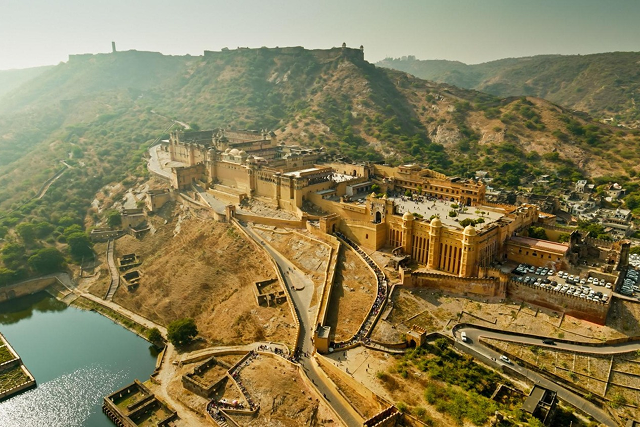
India’s forts tell stories of kingdoms, trade routes, military strategy and royal life. Some stand on steep hills, others rise from desert settlements, and a few were built beside rivers or surrounded by the sea. Their walls reveal how rulers used the natural terrain to protect cities, store water and defend important routes.
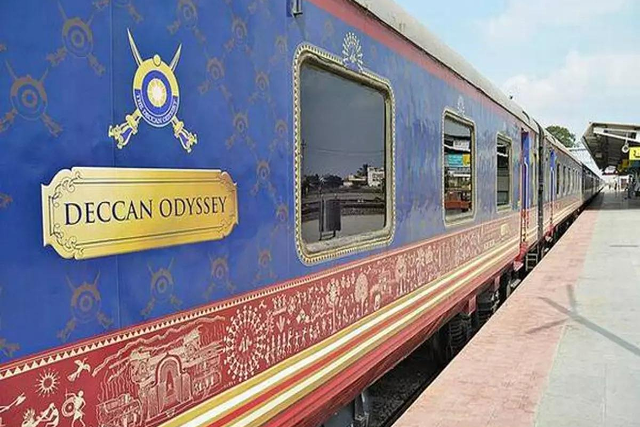
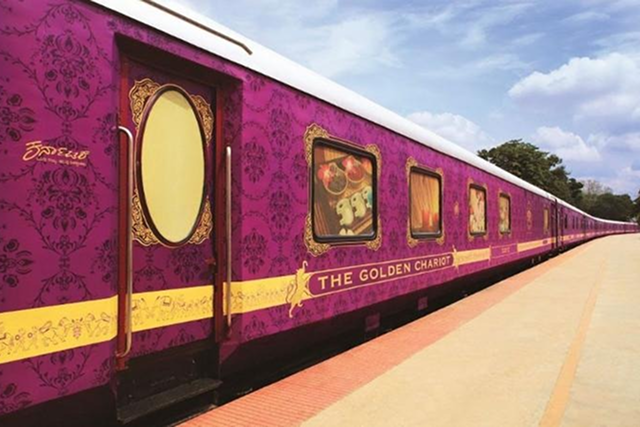
For travellers interested in ancient forts India luxury train journeys, Rajasthan offers some of the most rewarding experiences. The Palace on Wheels visits several forts on its classic circuit, while the Maharajas’ Express includes important fort destinations on selected itineraries. The Deccan Odyssey and Golden Chariot add a different perspective through the forts and fortified historic centres of western and southern India.
A luxury rail holiday makes it easier to combine these heritage visits with comfortable accommodation and organised excursions. The key is to choose an itinerary that matches the forts you most want to explore.
How to Read a Fort in Five Minutes
Start with the setting. Was the fort built on a hill, in a desert, beside a river or along the coast? Its location often explains its defensive purpose. Next, look at the gateways and walls: multiple gates, narrow approaches and bastions helped control entry. Notice water tanks, stepwells and reservoirs, which were essential during sieges. Inside, identify the difference between military structures, royal residences, temples and markets. Finally, look beyond the main palace. Many forts protected entire settlements and trade centres, not just the ruling family. UNESCO’s description of Rajasthan’s Hill Forts highlights this relationship between terrain, defence, water management and courtly life.
Forts vs Palaces: What Is the Difference?
A fort was primarily built for defence, although many also contained palaces, temples, markets, water systems and residential quarters. Its walls, gates, bastions and strategic position were designed to protect people and territory. A palace, by contrast, was chiefly a royal residence and a centre of administration and courtly life. The distinction is not always simple: forts such as Amber and Mehrangarh contain elaborate palatial buildings, while some palace complexes have defensive features. When visiting, look at how the structures work together. The fort explains how a kingdom protected itself; the palace reveals how its rulers lived, governed and received guests.
Forts on the Hills
Rajasthan’s hill forts were built to use steep slopes, rocky plateaus and forested terrain as natural defences. Four especially notable examples—Amber, Ranthambore, Chittorgarh and Mehrangarh—offer different perspectives on Rajput military and courtly architecture. Three of these, Amber, Ranthambore and Chittorgarh, belong to UNESCO’s serial listing, the Hill Forts of Rajasthan. Mehrangarh is an important heritage landmark but is not part of that UNESCO property
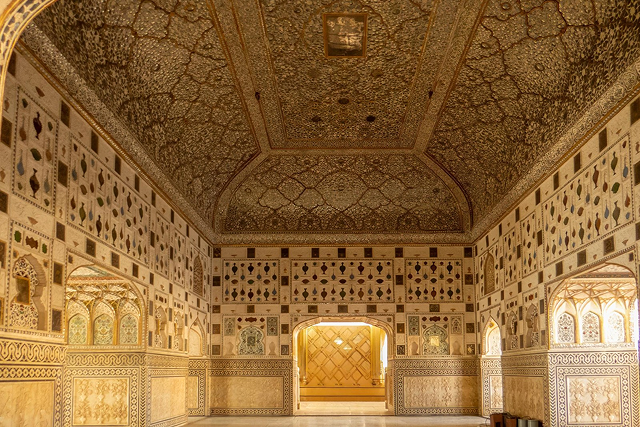
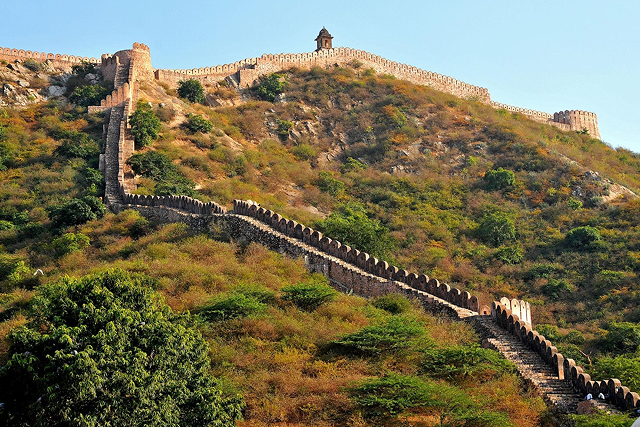
Amber Fort, Jaipur
Amber Fort stands above Maota Lake, combining defensive walls with courtyards, audience halls and richly decorated royal rooms. Its architecture reflects Rajput and Mughal influences. It is one of the six components of the UNESCO-listed Hill Forts of Rajasthan. The Palace on Wheels and Maharajas’ Express include Jaipur sightseeing on selected itineraries, making Amber a key fort to consider.
Ranthambore Fort, Sawai Madhopur
Ranthambore Fort rises above the forest of Ranthambore National Park. Its location gave defenders a commanding view of the surrounding terrain. Within the fort are temples, gateways and historic remains. It is part of the UNESCO Hill Forts of Rajasthan property. The Palace on Wheels and Maharajas’ Express include Sawai Madhopur in their routes, although the scheduled excursion may focus on the national park. Confirm fort access and sightseeing arrangements for your departure.
Chittorgarh Fort
Chittorgarh Fort occupies a large hilltop plateau and is associated with the history of Mewar. Its extensive remains include palaces, temples, towers and reservoirs. The fort is one of the six UNESCO-listed Hill Forts of Rajasthan. The Palace on Wheels has a dedicated Chittorgarh stop, making it one of the most direct ways to include this major fort in a Rajasthan rail holiday.
Mehrangarh, Jodhpur
Mehrangarh Fort rises above Jodhpur’s blue-painted old city. Its imposing walls enclose palaces, courtyards and a museum with collections linked to the Rathore rulers. The views from the ramparts are a highlight, particularly across the historic city below. Mehrangarh is not part of the UNESCO Hill Forts serial property, but it is one of Rajasthan’s most impressive fort visits. The Palace on Wheels and Maharajas’ Express include Jodhpur on selected itineraries.
Forts in the Desert
Desert forts had to do more than withstand attacks. They also protected trade routes, stored water and supported communities living in a challenging climate. Jaisalmer and Bikaner offer two very different examples: one is a living fortified town rising above the Thar Desert; the other is a royal fort built within a city. Both make excellent additions to a Rajasthan heritage journey.
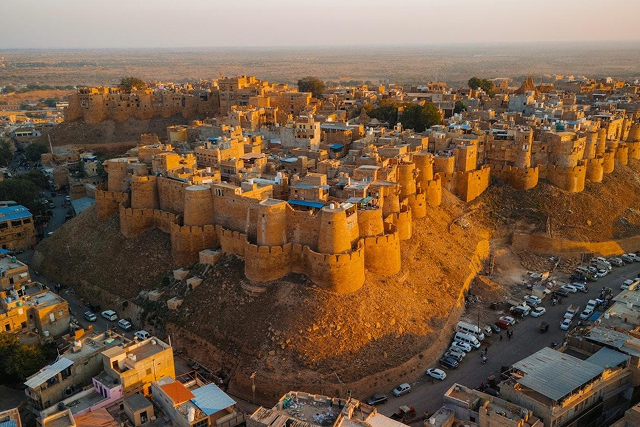
Jaisalmer Fort
Jaisalmer Fort is built from golden-yellow sandstone and remains home to residents, shops, temples and traditional houses. Its living urban character makes it different from many forts that survive mainly as monuments. It is one of the UNESCO-listed Hill Forts of Rajasthan and features on the Palace on Wheels route, with Jaisalmer sightseeing included.
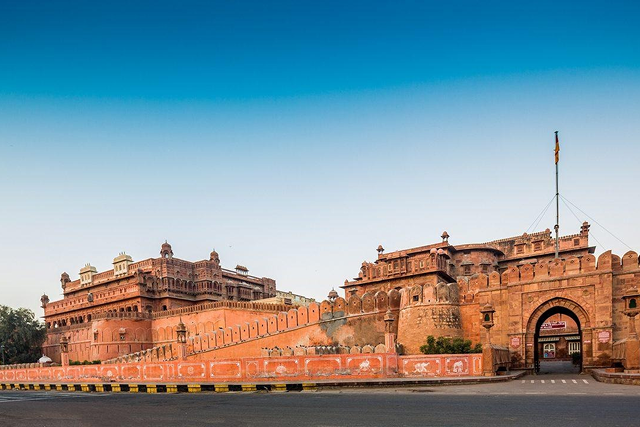
Junagarh Fort, Bikaner
Junagarh Fort stands on the plains rather than a hill, giving it a distinctive place among Rajasthan’s royal forts. Its complex includes palaces, courtyards, balconies and richly decorated halls built over several periods. Bikaner features on selected Maharajas’ Express journeys, including Heritage of India. Check the current excursion programme to confirm the fort visit for your departure.
Forts of the Mughals and Central India
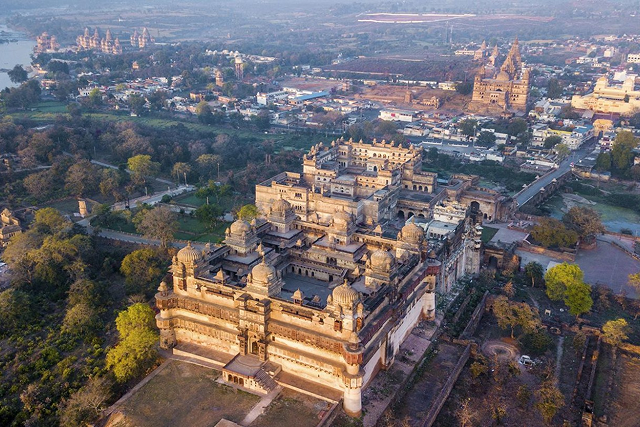
The Mughal and central Indian regions add another chapter to India’s fort history. Agra Fort was a major Mughal imperial residence and military stronghold, with palaces, audience halls and defensive walls overlooking the Yamuna. It is a UNESCO World Heritage property and is included in the Agra sightseeing programme of the Palace on Wheels. Orchha Fort Complex offers a different setting, with palaces such as Jahangir Mahal and Raj Mahal beside the Betwa River. Orchha is included on the Maharajas’ Express Indian Panorama itinerary. These destinations show how forts could serve as military centres and seats of royal administration.
A Fort in the Sea and a Fortified Capital in the South
Sindhudurg Fort was built on an island off the Konkan coast under Chhatrapati Shivaji Maharaj. Its sea walls, rocky setting and boat approach make it very different from Rajasthan’s hill forts. It is best planned as a separate coastal extension rather than assumed to be a scheduled stop on every Deccan Odyssey route.
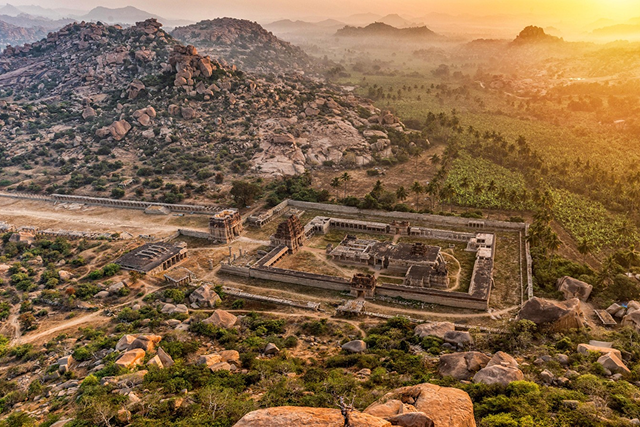
In the south, Hampi reveals the scale of a fortified imperial capital. Its remains include defensive walls, gateways, royal enclosures, temples and water structures spread across a remarkable rocky setting. The Golden Chariot includes Hampi on its published journeys, offering an opportunity to explore the former Vijayanagara capital.
Which Journey Passes the Most Forts?
For a concentrated Rajasthan fort experience, the Palace on Wheels is a strong choice. Its 7-night, 8-day circuit includes Jaipur, Sawai Madhopur, Chittorgarh, Jaisalmer, Jodhpur and Agra. Its published sightseeing highlights include Amber Fort, Chittorgarh Fort, Mehrangarh Fort and Agra Fort, with Jaisalmer Fort forming a prominent part of the city’s visit.
The Maharajas’ Express offers another excellent selection, with fort and heritage experiences across different itineraries, including Jaipur, Bikaner, Jodhpur, Ranthambore and Agra. For Hampi and southern fortified heritage, consider the Golden Chariot. The best comparison is therefore based on the actual forts included in your chosen departure, not just the number of destinations named in a route.
Before You Climb: Practical Tips
- Wear comfortable shoes: Forts involve uneven stone paths, steps and sloping approaches.
- Allow enough time: Large complexes such as Chittorgarh need several hours to explore.
- Carry water: Rajasthan’s heat can be intense, particularly from April to June.
- Dress appropriately: Some forts contain active temples and religious spaces.
- Hire a knowledgeable guide: Local history brings the architecture and events into context.
- Check accessibility: Many historic structures have stairs and limited wheelchair access.
- Confirm excursions: Sightseeing schedules, entry arrangements and optional visits vary by train and departure.
- Respect conservation rules: Avoid touching fragile carvings or leaving litter.
Plan Your Fort Journey with The Luxury Trains of India
From Rajasthan’s hill forts and desert citadels to the Mughal strongholds of Agra and the fortified capital of Hampi, India’s heritage offers many reasons to travel by rail. Each train brings a different selection of destinations, and the right choice depends on the forts you want to see.
The Luxury Trains of India can help you compare journeys aboard the Palace on Wheels, Maharajas’ Express, Deccan Odyssey and Golden Chariot. Our team can also assist with suitable pre- and post-train arrangements, private transfers, hotel stays and guided sightseeing.
Tell us which forts interest you and when you plan to travel. We can help identify a suitable itinerary and coordinate the arrangements around your journey.
Explore India’s heritage by luxury train with The Luxury Trains of India.
Frequently Asked Questions
Q1. Which luxury train visits the most forts in Rajasthan?
The Palace on Wheels offers a particularly strong Rajasthan fort circuit, including Amber, Chittorgarh and Mehrangarh, with Jaisalmer and Agra heritage sightseeing.
Q2. Is Amber Fort included in Palace on Wheels?
Yes. Amber Fort is part of the Jaipur sightseeing programme.
Q3. Does Palace on Wheels visit Mehrangarh Fort?
Yes. Its Jodhpur sightseeing includes Mehrangarh Fort.
Q4. Is Jaisalmer Fort a UNESCO site?
Yes. It is one of the six components of the UNESCO-listed Hill Forts of Rajasthan.
Q5. Does the Maharajas’ Express visit Bikaner?
Selected itineraries include Bikaner. Check the departure-specific sightseeing programme for Junagarh Fort.
Q6. Which train visits Hampi?
The Golden Chariot includes Hampi on its published itineraries.
Q7. Is Sindhudurg Fort included on every Deccan Odyssey journey?
No. Confirm the route and excursions before planning a visit.
Q8. Can I visit Agra Fort by luxury train?
Yes. Agra Fort is included in the Palace on Wheels sightseeing programme and is accessible on selected other rail itineraries.
Final Thoughts
India’s forts are far more than impressive stone walls. They reveal the military thinking, engineering, trade, faith and courtly traditions of the kingdoms that built them. Seeing Amber, Chittorgarh, Jaisalmer or Mehrangarh in person gives a much stronger sense of their scale and setting than reading about them alone.
A luxury train journey brings several of these historic destinations into one carefully arranged holiday. Choose the route around the forts you most want to explore, and allow time to appreciate each one.
Discover India’s historic forts by luxury rail: The Luxury Trains of India
Read Also This Blog